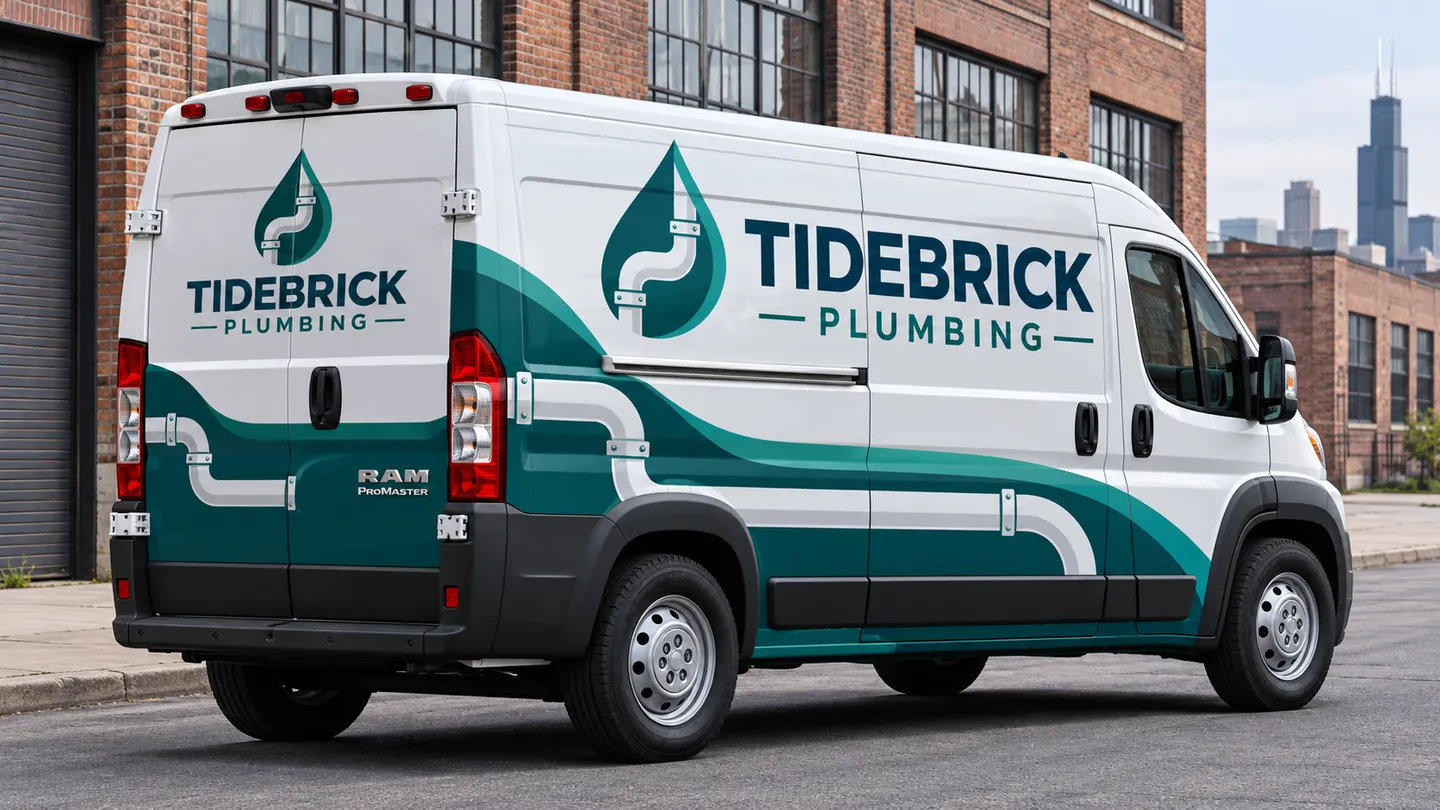
Turn a style into boundaries
Mark the included areas on actual van views. Explain how exposed paint, doors, trim and accessories meet the proposed graphics. If windows or roof areas are excluded, keep them visibly excluded rather than relying on a general statement hidden elsewhere in the quotation.
Ask how seams, edges and interrupted shapes will be handled in the finished appearance. The supplier should explain practical limitations before the artwork is released. A proof can show the intended layout, while the written scope describes the actual work and any exclusions.
- Identify every included body view.
- Mark excluded surfaces on the coverage diagram.
- Keep edge and hardware questions visible.
Approve production responsibilities
Confirm who supplies final wording and usable files, who checks dimensions and who authorizes the proof. Record whether removal or preparation is included. If the van has repaired paint or existing graphics, provide the history and ask what inspection or correction is needed before work proceeds.
Request the proposed material construction for the agreed surfaces. Use the current manufacturer technical information to frame exact-product questions rather than substituting a general premium label. Keep any approved change in film or coverage tied to a revised scope, particularly if production has already begun.
- Assign artwork and wording approval roles.
- Record removal and preparation responsibilities.
- Keep product substitutions in the change record.
Retain a usable handoff
At delivery, compare the installed wording and agreed surfaces with the accepted proof and scope. Record any remaining items and the person handling them. Ask for the installed product details and the applicable care instructions so the driver has a clear reference after collection.
Keep those records with the van’s unit identifier. They will help when contact details change, a panel is repaired or a matching vehicle joins the fleet. The scope should remain useful after the initial sale instead of disappearing into a folder of unnamed final proofs.
- Review completed work against the accepted record.
- Collect care and installed-product information.
- Keep revision references ready for later replacements.
Keep a working record
Before you approve the next step
- Mark coverage on actual vehicle views.
- Resolve edge and hardware questions.
- Name artwork and scope approvers.
- Agree on removal and preparation.
- Retain the exact installed construction.
- Keep the handoff with the vehicle record.
Use the free planning tool to organize the details you can confirm and the questions still open.
Four questions before the next step
Is choosing a coverage option the same as approving artwork?
No. The selected option describes a direction. Final approval still needs the actual vehicle, agreed surfaces, accurate wording and identifiable proof revision.
Read the detailed guide: Make van coverage approval specific enough to keep
What should be saved for a later panel replacement?
Keep the vehicle configuration, approved artwork, installed material construction, coverage diagram and any later changes. Those records give a supplier a stronger starting point than an unlabelled photo.
Read the detailed guide: Make van coverage approval specific enough to keep
Does full coverage include the roof and bumpers?
Ask the supplier to identify the actual included surfaces. Package names do not settle every panel, accessory or edge treatment.
Read the detailed guide: Compare van coverage options using the same brief
Can lettering be the right commercial option?
It can serve a focused identification goal when the layout, vehicle condition and approved scope support it. Compare the actual result rather than treating coverage labels as a quality ranking.
Read the detailed guide: Compare van coverage options using the same brief
Original technical sources
Use the linked publisher's current instructions for the exact product and vehicle. This planning guide does not replace its application, safety or warranty requirements.