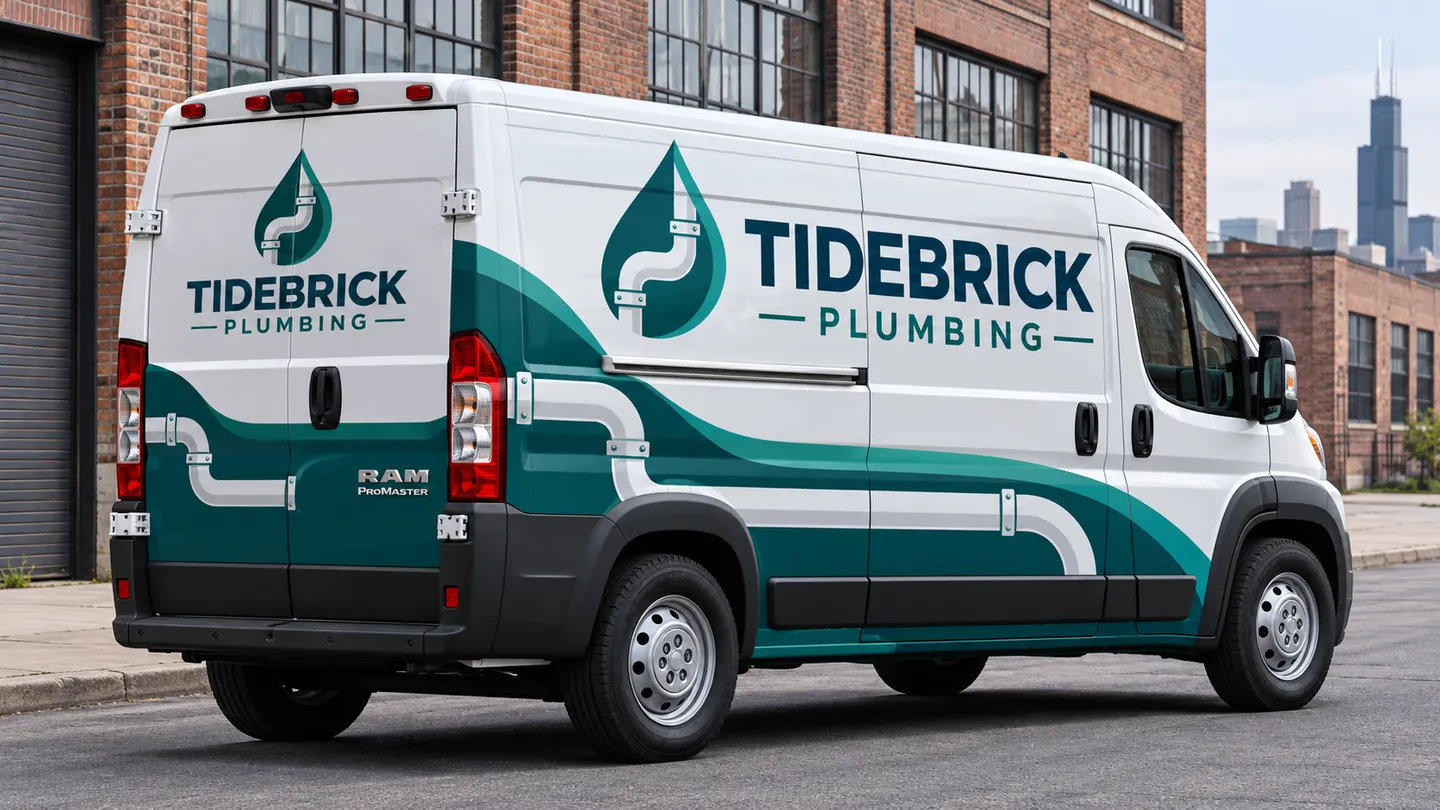
Record configuration and confidence
Collect the year, make, model and available body specifications from reliable vehicle records. Distinguish wheelbase from overall length. If a value has not been verified, label it unknown or estimated instead of entering a plausible number that later looks like a confirmed measurement.
Photograph the actual left side, right side and rear. Include a reference to the unit used in the fleet list. The production provider should confirm which template and physical measurements are appropriate; the buyer’s configuration record helps identify mismatches before they move into a layout.
- Keep wheelbase and body length separate.
- State the source of each configuration detail.
- Label uncertain information clearly.
Capture doors and accessories
Identify sliding doors, rear-door construction and any windows in the proposed coverage. Record racks, ladders, cameras, sensors, steps or protective trim that affect placement and access. The left and right sides may not have identical panel arrangements, so mirroring one photo can hide useful differences.
Show frequently opened doors in the positions relevant to normal work. This is especially useful when the van serves as a moving workstation. Ask the designer how the business identity remains understandable across those operating states without assuming that every surface should receive graphics.
- Photograph each side independently.
- Show working door positions where useful.
- Record accessories near intended graphics.
Match the record to final approval
Use the same configuration reference on the accepted quote and proof. For several vans, group only the units that actually share the relevant body and scope. If a replacement van arrives with different dimensions or equipment, pause the assumption that the earlier design transfers unchanged.
Keep verified measurements, approved artwork and installed material information in the vehicle record. Current manufacturer technical resources support product-specific application questions, but they do not select the correct vehicle template or validate a measurement copied from another body.
- Match the proof to an identifiable vehicle group.
- Recheck changes in body or equipment.
- Keep the verified production references at handoff.
Keep a working record
Before you approve the next step
- Record year, model and body variant.
- Separate roof, wheelbase and length.
- Note the source and confidence of details.
- Photograph both sides and rear.
- Show doors and relevant accessories.
- Match the accepted proof to the actual van.
Use the free planning tool to organize the details you can confirm and the questions still open.
Four questions before the next step
Can two vans with the same badge use one layout?
They may share a design system, but the body configurations and useful surfaces still need confirmation. Model name alone does not prove that dimensions and doors match.
Read the detailed guide: Identify the right van body before the quote
Should I measure the van myself?
You can provide clearly labeled field measurements with units and reference points. Ask the provider which measurements need their verification before production.
Read the detailed guide: Identify the right van body before the quote
Does full coverage include the roof and bumpers?
Ask the supplier to identify the actual included surfaces. Package names do not settle every panel, accessory or edge treatment.
Read the detailed guide: Compare van coverage options using the same brief
Can lettering be the right commercial option?
It can serve a focused identification goal when the layout, vehicle condition and approved scope support it. Compare the actual result rather than treating coverage labels as a quality ranking.
Read the detailed guide: Compare van coverage options using the same brief
Original technical sources
Use the linked publisher's current instructions for the exact product and vehicle. This planning guide does not replace its application, safety or warranty requirements.