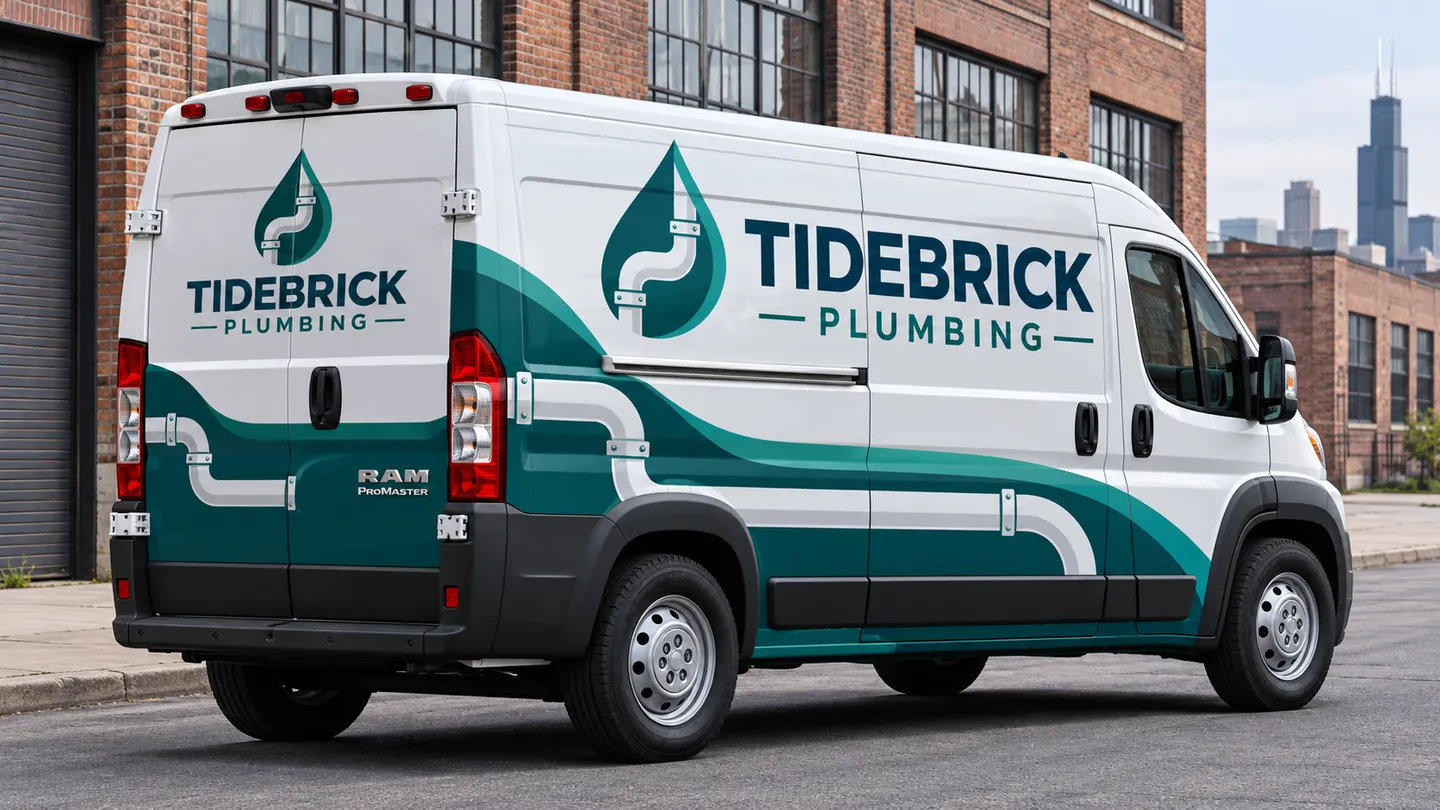
Use one business message
Write the name, main service and contact route that should appear. Identify their priority order rather than giving every item equal weight. A useful coverage comparison shows how each option communicates those same facts, even when their scale or arrangement differs.
Keep brand development separate from vehicle layout. If one proposal includes rebuilding the logo or rewriting the message, record it as a scope difference. That work may be valuable, but it should not be hidden inside a comparison described only as partial versus full graphics.
- Use the same approved wording for each option.
- Record new artwork development separately.
- Define the primary identity and supporting information.
Show what each option covers
Use the actual van photos to mark included panels and exposed paint. Ask about roof, bumpers, windows, rear doors and other surfaces instead of assuming package labels settle them. A partial design needs to work with the van’s existing paint color as part of the composition.
Review both sides and the rear in their actual configurations. Doors, trim and body details can differ between vehicles with similar names. The comparer’s descriptions are conceptual; the supplier needs to confirm dimensions, condition and the practical installation boundaries of the selected design.
- Mark included and excluded panels explicitly.
- Show the existing paint in partial concepts.
- Check side and rear coverage independently.
Choose with the complete scope visible
Compare the proposed preparation, removal, material construction and handoff for each option. Request exact-product information when a system is proposed and use the linked manufacturer sources for current application questions. A broader graphic area does not make different products or responsibilities automatically equivalent.
Keep the reason for your choice with the accepted proof and written scope. The selected option should reflect your communication priorities, useful surfaces and budget inputs. It is not a promise of a particular number of inquiries, resale benefit or universally best coverage level.
- Compare the same preparation and removal assumptions.
- Ask why the proposed construction fits the van.
- Retain the selected option and its agreed exclusions.
Keep a working record
Before you approve the next step
- Write one message for all coverage options.
- Identify the actual van configuration.
- Collect both-side and rear photos.
- Mark covered panels and exposed paint.
- Compare artwork, preparation and materials.
- Save the selected scope with its proof.
Use the free planning tool to organize the details you can confirm and the questions still open.
Four questions before the next step
Does full coverage include the roof and bumpers?
Ask the supplier to identify the actual included surfaces. Package names do not settle every panel, accessory or edge treatment.
Read the detailed guide: Compare van coverage options using the same brief
Can lettering be the right commercial option?
It can serve a focused identification goal when the layout, vehicle condition and approved scope support it. Compare the actual result rather than treating coverage labels as a quality ranking.
Read the detailed guide: Compare van coverage options using the same brief
Can two vans with the same badge use one layout?
They may share a design system, but the body configurations and useful surfaces still need confirmation. Model name alone does not prove that dimensions and doors match.
Read the detailed guide: Identify the right van body before the quote
Should I measure the van myself?
You can provide clearly labeled field measurements with units and reference points. Ask the provider which measurements need their verification before production.
Read the detailed guide: Identify the right van body before the quote
Original technical sources
Use the linked publisher's current instructions for the exact product and vehicle. This planning guide does not replace its application, safety or warranty requirements.